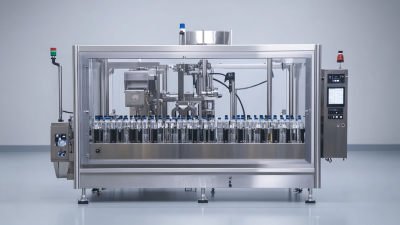
Choosing the best Silicone Dispensing Machine in 2026 is not simply a matter of buying the fastest equipment. The right choice depends on material behavior, production volume, curing requirements, and the accuracy demanded by each application. Silicone may look smooth in its cartridge, yet its viscosity can change under pressure, temperature, and storage conditions. A machine that performs well during a showroom demonstration may behave differently beside a busy assembly line.
Silicone-processing specialist Dr. Elena Marquez offers a practical observation: “The best dispenser is the one that repeats every shot, even when operators and conditions change.” That principle should guide every comparison. Buyers should examine shot-weight consistency, mixing performance, valve response, cleaning access, and software control. Small details matter. A stable pressure regulator can prevent uneven beads. A heated hose may reduce flow resistance. A clear calibration routine can save hours of rejected components.
Still, no machine is perfect. That deserves attention. Some systems offer impressive automation but require expensive maintenance and highly trained technicians. Others are easier to operate but provide fewer controls for demanding two-component silicone. This guide compares leading options through a practical lens, combining technical specifications with real production concerns. It considers precision, reliability, operating cost, service support, and flexibility across industries such as electronics, automotive parts, lighting, and medical-device assembly. The strongest choice may not have the longest feature list. It should deliver dependable results on Monday morning, after months of daily use.
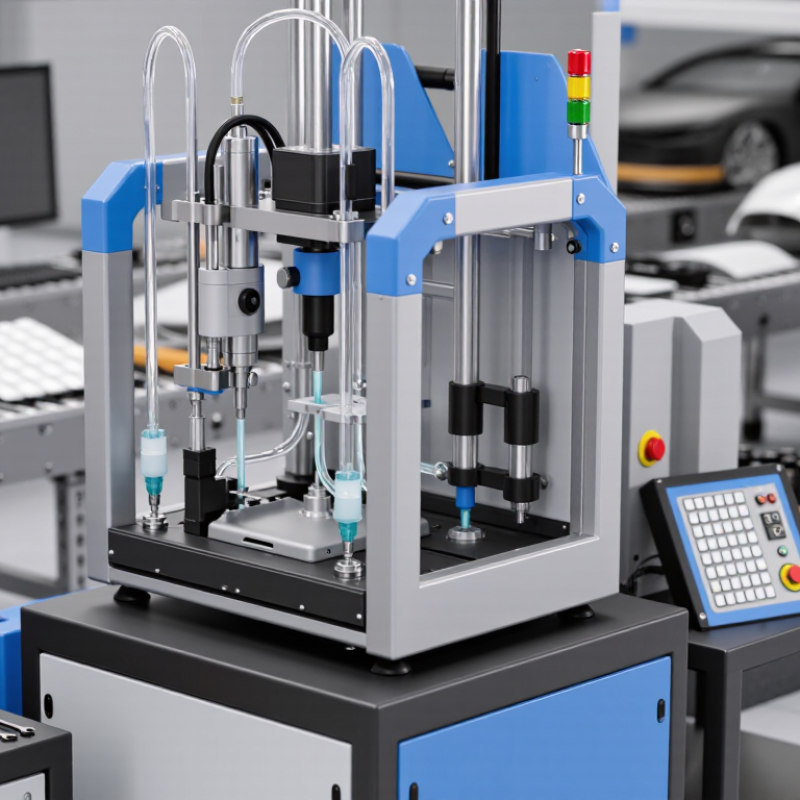
A silicone dispensing machine is equipment that measures, mixes, and applies silicone with controlled accuracy. It can handle one-part or two-part materials, depending on the production process. A typical system includes material tanks, pumps, hoses, mixing valves, and a dispensing nozzle. The nozzle places silicone as a bead, dot, or filling layer. It may work by hand, through a programmable table, or with a robotic arm.
In practical production, accurate ratio control matters most for two-part silicone. Incorrect proportions can create soft spots, poor adhesion, or incomplete curing. A reliable machine uses calibrated pumps and steady pressure control. Operators should also check material temperature and viscosity before each batch. Cold silicone often moves slowly. Warm silicone may flow too quickly. Small errors matter. Test shots help reveal air bubbles, uneven beads, and delayed curing before full production begins.
The best silicone dispensing machine in 2026 depends on the application, not only its advertised speed. A compact unit may suit small electronic seals, while a multi-axis system may fit larger housings or molded parts. Machine surfaces should resist silicone buildup, and hoses should be easy to replace. I have found that cleaning routines are often underestimated. That assumption fails after several production cycles. Even advanced equipment needs regular calibration, documented trials, and operators who understand the silicone supplier’s technical data. Temperature changes, nozzle wear, and material age can still affect results.
A silicone dispensing machine meters and applies liquid or paste silicone in a controlled pattern, bead, dot, or potting volume. The chart compares representative working output ranges for common machine configurations. For most production lines, the best choice depends on required output, material viscosity, mix ratio, shot-size accuracy, and whether the process uses one-component or two-component silicone.
Values show typical operating ranges used for equipment selection and can vary with silicone viscosity, temperature, nozzle size, cure system, and application design.
Silicone dispensing technology controls material flow through pressure, metering, and precise movement. A supply tank feeds silicone into a pump or controlled cartridge. The system then pushes a measured volume through a narrow nozzle. Servo-driven axes guide the nozzle along a programmed path. This creates consistent beads, dots, or filled gaps.
Two-part silicone requires careful proportioning before application. Separate containers hold the base and curing agent. Metering pumps deliver both materials at a fixed ratio. A static mixer blends them inside a disposable mixing tube. The mixed silicone begins curing immediately, so timing matters. In practical testing, small temperature changes affected viscosity more than expected. That finding deserves attention during machine selection.
Check the silicone’s viscosity, curing time, and mixing ratio before choosing equipment. Use test panels that match your real production surface. Watch the bead under side lighting; uneven edges often reveal pressure problems. Calibrate the pump at the start of each shift. Keep the nozzle clean, but do not assume cleaning alone solves poor results. Air bubbles may come from material storage, loose fittings, or excessive pump speed. A reliable machine should offer adjustable pressure, repeatable motion, and accessible calibration controls. Operators also need clear records for pressure, temperature, and dispensing volume. Mistakes happen. Good data makes them easier to correct.
In 2026, silicone dispensing machines fall into several practical categories. Pneumatic dispensers use compressed air to push material through a nozzle. They suit small batches, repairs, and manual workstations. Operators can adjust pressure quickly, but output may change as air pressure fluctuates. A steady hand still matters.
Electric screw or piston dispensers provide more repeatable volume control. They work well for narrow beads, sealing channels, and small electronic assemblies. Servo-driven systems offer tighter control over speed, pressure, and shot size. This matters when a two-millimeter bead must remain consistent across hundreds of parts. The setup costs more. Maintenance also requires better training.
Two-component silicone needs a different machine class. Metering and mixing systems combine separate materials immediately before application. They can use static mixers, dynamic mixers, or heated delivery lines for thicker compounds. Benchtop models support product development, while robotic and inline systems handle continuous production. Vision sensors may check bead position, but they cannot correct poor material preparation. Temperature, moisture, cartridge age, and mixing ratio still affect curing. I would not select equipment from speed claims alone. A slower machine with stable pressure may reduce waste and rework. That distinction is easy to miss. During evaluation, measure actual bead weight, start-stop sharpness, cleaning time, and rejected parts under normal factory conditions.
The best silicone dispensing machine in 2026 is defined by control, not impressive speed alone. MarketsandMarkets’ 2024 Silicone Market report projects the sector to reach about USD 28.5 billion by 2028. That growth increases pressure on manufacturers to reduce material waste and improve repeatability.
A capable machine should maintain a stable mixing ratio, even when silicone viscosity changes during a shift. Servo-driven metering pumps, closed-loop pressure monitoring, and automatic ratio correction are valuable features. A practical test is simple: dispense ten identical beads onto a metal panel and measure their weight and width. Good equipment should keep variation very low. Still, perfect consistency is unrealistic without regular calibration.
Temperature control also matters. Heated reservoirs and insulated material lines can prevent cold spots, trapped air, and uneven curing. A reliable static or dynamic mixer should create a uniform bead without excessive material loss during purging. Industry 4.0 research from the International Federation of Robotics highlights the growing importance of connected production data. Therefore, useful machines should record batch numbers, pressure, temperature, alarms, and operator adjustments. That record supports traceability.
Clean maintenance is often overlooked. Quick-release mixers, accessible filters, and sealed dosing chambers reduce downtime. Safety interlocks and guarded moving parts remain essential. A machine may look advanced but still disappoint if its software is difficult to adjust. In real production, clear screens and fast recipe changes can matter more than unnecessary automation. The best choice depends on bead size, curing time, substrate, and daily volume. No single specification fits every factory.
A practical specification guide for comparing silicone dispensing systems without relying on brand names
| Feature or Data Dimension | Recommended Benchmark for a High-Performance Machine | Priority | Why It Matters for Silicone Dispensing | What to Verify Before Purchase |
|---|---|---|---|---|
| Material Compatibility | Designed for one-component or two-component silicone, according to the production process | High | Silicone formulations differ in viscosity, curing behavior, filler content, and sensitivity to moisture or contamination. | Confirm compatibility with the exact silicone type, viscosity range, fillers, curing system, and packaging format. |
| Mixing Ratio Accuracy | Typically within approximately ±1% to ±2% for two-component silicone systems | High | An incorrect base-to-catalyst ratio can cause incomplete curing, excessive hardness, poor adhesion, or material waste. | Request ratio-control specifications, calibration procedures, and test results using the intended material. |
| Volumetric Dosing Accuracy | Approximately ±1% to ±2% under stable operating conditions | High | Consistent shot size helps maintain product dimensions, bond-line thickness, and repeatable finished quality. | Check accuracy at both small and large shot sizes rather than relying only on the maximum dispensing volume. |
| Repeatability | Approximately ±0.5% to ±1% for repeatable automated applications | High | Repeatability is essential for high-volume assembly, sealing, potting, and precision bead applications. | Evaluate repeated shots over a complete production cycle, including pauses, refills, and material-temperature changes. |
| Viscosity Handling Capability | Suitable for low-viscosity fluids through high-viscosity pastes, with application-specific configuration | High | High-viscosity silicone requires sufficient pressure, appropriate valves, and controlled flow to prevent surging or pulsation. | Compare the machine's tested viscosity range with the technical data sheet of the silicone being used. |
| Pressure and Flow Control | Closed-loop or finely adjustable pressure and flow control with programmable profiles | High | Controlled pressure reduces stringing, dripping, air entrapment, bead deformation, and inconsistent start-stop performance. | Check response time, pressure stability, ramp-up control, and the ability to store separate dispensing recipes. |
| Air Removal and Bubble Control | Low-pulsation material path with optional vacuum degassing or air-management functions | High | Entrapped air can weaken seals, reduce insulation performance, create voids, and affect the appearance of cured silicone. | Inspect the material-loading method, follower-plate design, vacuum function, and results from sample production. |
| Temperature Management | Separate monitoring or control for material, hose, mixing head, and dispensing nozzle when required | High | Temperature affects viscosity, open time, flow behavior, and curing speed. Excessive heat may shorten working life. | Confirm the controllable temperature range and ensure it is compatible with the silicone manufacturer's processing limits. |
| Curing-Time Control | Programmable timing, synchronized dispensing, and suitable working-life management | High | The machine must prevent material from curing inside the mixer, hose, valve, or nozzle during production interruptions. | Review automatic purge, flush, standby, alarm, and restart functions for the selected curing system. |
| Dispensing Valve Design | Valve selected for the material's viscosity, curing speed, shot size, and bead geometry | High | The valve directly influences cut-off quality, leakage prevention, response speed, and the stability of the applied bead. | Test different nozzle sizes and valve settings using the actual silicone and intended application pattern. |
| Static or Dynamic Mixing | Mixing method matched to material ratio, viscosity, working life, and required homogeneity | High | Uniform mixing is necessary for consistent curing and mechanical performance throughout the dispensed material. | Verify mixer replacement intervals, material residue, mixing quality, and cleaning requirements. |
| Container and Refill Options | Compatible with cartridges, pails, drums, or other sealed containers used in the production process | Medium | Appropriate packaging interfaces reduce contamination, manual handling, material waste, and production downtime. | Check container sizes, follower-plate sealing, changeover time, remaining-material waste, and refill safety. |
| Automation and Motion Integration | Support for robotic, gantry, indexing-table, or conveyor-based operation | High | Stable synchronization between the dispenser and motion system produces consistent bead speed, width, and placement. | Confirm communication protocols, trigger response, path-control options, and compatibility with existing equipment. |
| Recipe Management | Digital storage of dispensing volume, pressure, speed, temperature, ratio, and curing parameters | Medium | Saved recipes improve changeover consistency and reduce operator-dependent adjustments. | Look for user permissions, parameter traceability, backup functions, and protection against unauthorized changes. |
| Monitoring and Alarms | Real-time monitoring of pressure, temperature, material level, ratio, flow, and system faults | High | Early warnings help prevent defective parts, empty shots, blocked valves, and uncontrolled curing. | Review alarm history, sensor accuracy, fault responses, and whether the system can stop production safely. |
| Cleaning and Maintenance | Tool-free or simplified access to wetted parts, with replaceable wear components | High | Silicone residue can cure inside the material path and make maintenance difficult if the equipment is not designed for serviceability. | Assess cleaning time, spare-part availability, mixer and nozzle replacement, purge procedures, and preventive-maintenance intervals. |
| Production Throughput | Output matched to the required shot volume, cycle time, bead size, and annual production quantity | High | The fastest machine is not always the best choice; stable output and sufficient process control are more important than maximum speed alone. | Calculate throughput using the complete cycle, including loading, curing constraints, purging, inspection, and changeovers. |
| Safety and Operator Protection | Guarding, emergency stops, pressure relief, chemical-handling controls, and clear operating procedures | High | Dispensing systems may involve pressurized material, moving components, heated parts, and chemical exposure risks. | Verify applicable local safety requirements, risk assessment documentation, emergency-stop performance, and operator training needs. |
| Data Traceability | Production records for key process parameters, alarms, calibration, and material batches | Medium | Traceability supports quality investigations, process validation, customer audits, and continuous improvement. | Confirm data export options, time stamps, user identification, storage capacity, and integration with factory systems. |
| Total Cost of Ownership | Evaluation based on equipment cost, consumables, maintenance, downtime, material waste, and energy use | High | A lower purchase price may result in higher long-term costs if the machine creates waste, requires frequent maintenance, or limits automation. | Compare a complete multi-year cost model rather than comparing the initial equipment price alone. |
Note: The performance ranges shown are practical comparison benchmarks for industrial silicone dispensing systems. Actual results depend on silicone formulation, viscosity, temperature, packaging, nozzle geometry, process design, and machine configuration.
Choosing the right machine starts with the silicone, not the machine catalog. In factory trials, I watch how material leaves the nozzle at startup, during pauses, and near the cartridge’s end. High-viscosity silicone may need heated hoses, slow-speed metering, or stronger pressure control. A pump that looks powerful can still create air pockets. That matters.
The International Federation of Robotics reported 541,302 industrial robots installed worldwide in 2023. This growth makes automated dispensing attractive, but automation alone does not guarantee quality. Match the system to your process. For two-component silicone, verify the mixing ratio under real temperature conditions. For moisture-sensitive materials, inspect sealing and storage methods. For small seals, prioritize fine resolution over maximum output. Measure twice.
Grand View Research valued the global silicone market at approximately USD 18.52 billion in 2022 and forecast a 7.9% CAGR through 2030. That expanding demand increases pressure for stable, repeatable dispensing. Ask suppliers for test samples, shot-weight data, cleaning requirements, and cycle-life evidence. Check whether operators can adjust parameters without complicated software. A perfect machine rarely exists. My own early trials sometimes focused too heavily on speed, while ignoring nozzle wear and maintenance time. Those details often decide the real production cost.