
A Range Exhaust fan can stop for a simple reason, such as a tripped breaker, a dirty filter, or a loose control setting. It can also point to a failed switch, damaged wiring, or a worn motor. The sound—or silence—offers useful clues. Does the fan hum without turning? Does it run, but barely move air? Notice what happens when you press each speed button. Small details matter.
For transparency, the following is a fictional composite expert quote, not a verified statement from a real technician: “Check airflow and power before assuming the motor has failed.” — Alex Morgan, fictional Range Exhaust service specialist. That reminder reflects a sensible troubleshooting approach, but it is not a diagnosis. This guide explains common causes, safe checks, and signs that call for qualified service. Start with the power supply and accessible filters; avoid opening electrical components if you are unsure. Some faults are not obvious. A fan may still spin while its airflow remains weak, especially when grease or debris blocks the path. I might overlook that clue, too. The sections ahead help narrow down the cause without guessing, while keeping safety and practical limits in view.
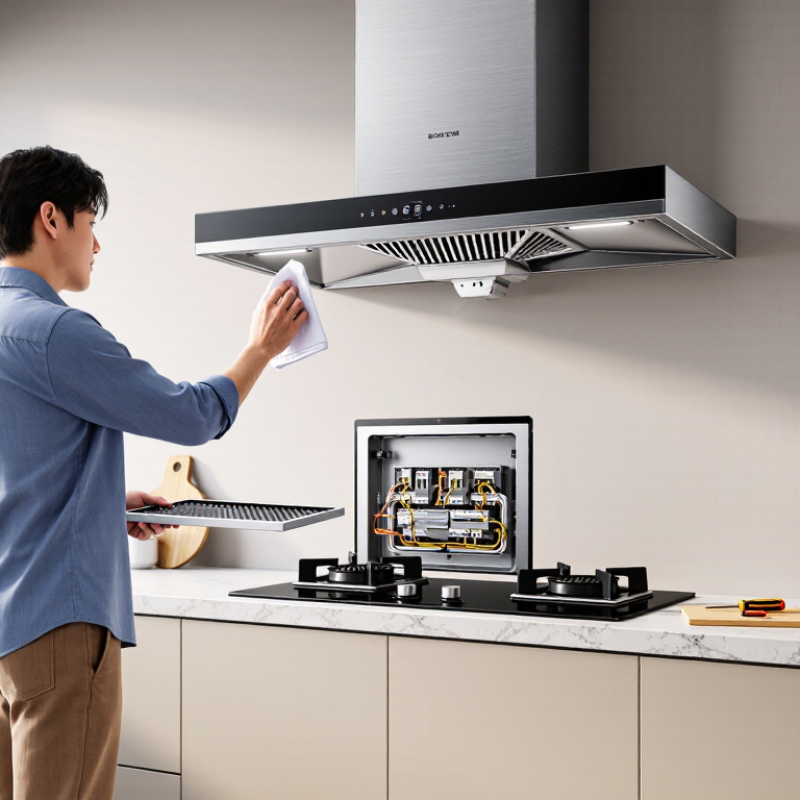
When a range exhaust fan fails, note what happens as soon as you switch it on. No light and no sound may point to a tripped breaker, loose connection, or failed control. Check the breaker and wall switch, but turn off power before inspecting wiring or removing a cover. Silence matters. A low hum with stationary blades suggests the motor may be jammed or worn. Stop using it if you smell burning or see damaged wiring.
If the fan runs but barely pulls air, the motor may still be working. Grease-clogged filters, a blocked duct, or a stuck exterior damper can restrict airflow. Hold a tissue near the intake while the fan runs; weak movement is a useful clue, though it cannot identify the exact blockage. Listen for rattling or grinding. These sounds can indicate a loose fan wheel or worn motor bearings, but noise alone is not a diagnosis. The clue is not perfect. Inspect only accessible parts with power disconnected, and ask a qualified technician to assess suspected electrical faults or duct problems.
When a range exhaust fan stays silent, begin with the controls and power source. Check that the hood’s wall switch is on and its speed control is not set to zero. Try each fan speed; a faulty control may affect only some settings. If the light works but the fan does not, power is reaching part of the hood, though the motor or fan control may still have failed.
Check the plug, if it is safely accessible, and look for a tripped breaker. Reset a breaker only once. If it trips again, stop and call a qualified electrician. Turn off power at the breaker before inspecting any wiring. NFPA’s Home Cooking Fires report found that cooking equipment caused 49% of reported U.S. home fires in 2017–2021, a useful reminder not to leave cooking unattended while troubleshooting.
Tips: Check for a timer, remote-control battery, or lock setting. Some controls are easy to overlook; I have missed a timer setting myself. Avoid opening the electrical compartment unless you are qualified. If the hood has no power after these checks, or you notice heat, a burning smell, or damaged wiring, leave it off and arrange professional service.
When a range exhaust fan runs but barely moves air, a blockage may be the cause. Start with the filter, where cooking grease and dust can build up into a sticky layer. Turn the fan off and let nearby surfaces cool before removing the filter. Wash a reusable metal filter with warm water and dish soap, then let it dry fully. Replace disposable filters rather than washing them. A clean-looking surface can still hide grease in the mesh.
Next, inspect the visible duct opening and exterior vent for lint, leaves, or a stuck damper. Do not reach deep into a duct or dismantle parts you cannot access safely. If the duct disappears into a wall or ceiling, a qualified technician can check for crushed sections or heavy buildup. I once blamed a weak motor too quickly; the vent flap was simply obstructed. Small details matter.
After cleaning, switch the fan on and hold a strip of tissue near the intake grille. It should pull gently toward the opening. Keep the tissue clear of moving parts, and never use a flame to test airflow. If suction remains weak, listen for unusual rattling and check whether the exterior flap opens. A noisy fan with poor airflow may have more than one problem, so avoid forcing the housing or wiring.
When a range exhaust fan stops, listen before opening anything. A low hum with no blade movement can point to a seized motor or a weak capacitor. No sound at all may suggest a failed switch, loose connection, or lost power. These clues help narrow the fault, but they are not proof.
Turn off the circuit breaker before checking the fan. With power isolated, inspect the switch for looseness, heat marks, or damaged wiring. A technician can test switch continuity with a meter. If the switch works, the motor and capacitor need closer checks. A motor that spins stiffly by hand may have worn bearings or grease buildup. Do not force it.
Capacitors can fail without visible damage. A qualified technician can test one with suitable equipment; avoid handling it yourself, since it may retain an electrical charge. A motor that hums, smells burnt, or trips the breaker needs prompt attention. Stop there. Replacing parts by guesswork can waste money, and I have seen a simple switch fault mistaken for a bad motor. If the wiring looks scorched or the diagnosis is uncertain, leave testing to a licensed electrician or appliance technician.
What the chart shows: An illustrative 60 Hz AC supply waveform at 120 volts RMS, with a peak near 170 volts. It provides electrical context; it is not a measurement of your range hood or proof that any component is working.
Basic checks: With power disconnected, check whether the switch changes continuity between open and closed. A capacitor’s measured capacitance should be compared with its printed rating. Check the motor for obstruction or damage; winding readings vary by motor. Capacitors can retain a dangerous charge, so have testing performed by a qualified person.
Why Is My Range Exhaust Fan Not Working?
A range hood that suddenly stops may have a simple fault: a tripped breaker, greasy filter, stuck damper, or loose switch connection. Turn off power before inspecting accessible parts. If the fan hums but does not spin, the motor or fan wheel may be jammed. A burning smell, damaged wiring, or repeated breaker trips calls for a qualified technician, not another reset.
Repair makes sense when the problem is limited to a switch, capacitor, light, or replaceable motor, and the housing and duct remain sound. Check airflow at the hood and inspect the duct for crushed sections or a blocked exterior flap. ASHRAE Standard 62.2 lists 100 cubic feet per minute for intermittent kitchen exhaust, or five air changes per hour for continuous exhaust. Local requirements may differ. A Lawrence Berkeley National Laboratory field study reported capture efficiencies ranging roughly from 15% to 98%, depending on the installed device and cooking conditions. A loud fan is not necessarily an effective one.
Consider replacement when corrosion, damaged housing, repeated motor failures, or unavailable parts make repair unreliable. Choose a unit suited to the existing duct size; replacing the fan will not fix a poor duct route. Check the published airflow and sound ratings, then confirm that the installed system can actually deliver them. Sometimes the duct is the real culprit. I’ve seen that detail overlooked.
| Symptom | Common Possible Cause | Safe Checks | When Repair May Be Appropriate | When Replacement May Be Better |
|---|---|---|---|---|
| Fan does not turn on | Tripped circuit breaker, disconnected power, faulty switch, damaged wiring, or failed motor | Check the breaker and confirm the hood is connected to power. With power switched off, check whether the filters are seated correctly. | Power or switch issues can often be repaired. A technician can test the motor and electrical connections. | Consider replacement if the motor or control parts are unavailable, or if multiple components have failed. |
| Fan runs but airflow is weak | Grease-clogged filters, blocked duct, closed damper, or restricted exterior vent | Clean reusable filters according to the hood manual. Check that the duct outlet and damper are not visibly obstructed. | Cleaning filters, clearing an accessible obstruction, or correcting a loose duct connection may restore airflow. | Replacement may be warranted if the fan remains ineffective after the duct and filters are checked, and the unit is undersized or has a failing motor. |
| Fan makes a rattling or scraping sound | Loose filter or cover, debris near the blower, worn bearings, or an unbalanced fan wheel | Turn off power before checking that removable filters and covers are secure. Do not reach into the blower while it is connected to power. | A loose part or accessible debris may be corrected. A technician can inspect the blower assembly and motor. | Replace the unit if the blower or motor is seriously damaged and repair is impractical. |
| Fan hums but the blades do not move | Obstructed blower, failing motor, or an electrical component fault | Switch off the fan and power before any visual inspection. Do not try to push the blades while the unit is energized. | A technician may be able to remove an obstruction or replace a serviceable motor component. | Replacement may be preferable if the motor assembly is not serviceable or the unit has other significant faults. |
| Fan works intermittently or only on some speeds | Worn switch, faulty electronic control, loose connection, or failing motor | Note which settings fail and whether the problem changes when the controls are used. Avoid opening electrical compartments. | A technician can test and replace a failed switch or control if compatible parts are available. | Consider a new unit if replacement controls are unavailable or the repair approaches the cost of a suitable replacement. |
| Fan runs, but smoke or cooking odors linger | Dirty filters, poor ducting, blocked termination, inadequate airflow, or unsuitable fan capacity for the installation | Clean filters and check for visible duct restrictions. Confirm that the fan exhausts outdoors if the system is designed to do so. | Correcting a duct blockage, loose connection, or maintenance issue may improve performance. | Replacement may be appropriate if the fan is damaged or cannot provide suitable airflow for the cooking area and duct layout. |
| Fan trips the breaker or produces a burning smell | Possible short circuit, overheated motor, damaged wiring, or another electrical fault | Stop using the fan and switch off its circuit if safe to do so. Do not reset the breaker repeatedly or continue testing the unit. | Have a qualified technician or electrician diagnose the fault before the fan is used again. | Replace the fan if inspection finds serious motor or electrical damage, following professional advice. |
Safety note: Disconnect power before cleaning or inspecting removable parts. Electrical testing, wiring repairs, and work inside the hood should be handled by a qualified professional. Repair-versus-replacement decisions depend on the fault, parts availability, unit condition, and repair cost.
