
Automated Dispensing Robot Videos

A World of Robotic Dispensing and Assembly Solutions

What Is the Best Automatic Stacker for 2026?

Choosing the best Automatic Stacker for 2026 starts with the work it must do every shift. A compact unit that handles light cartons may struggle with heavy pallets, uneven floors, or tight turns. The right choice depends on load weight, lift height, aisle width, duty cycle, and the space available for charging and maintenance.

One buyer’s rule of thumb captures the practical test: “Judge the stacker by its busiest hour, not its best demonstration.” This is an editorial guideline, not a verified quotation from a named industry expert. A credible recommendation should be grounded in real operating conditions, measurable specifications, and documented service support—not a polished product video alone.

This guide compares stacker types, safety and control features, battery options, and ownership costs. It also considers details that are easy to overlook: whether the forks clear your pallets, whether operators can see the load, and how smoothly the machine turns near racking. Small details matter.

No single model is best for every warehouse. A unit that feels stable on a showroom floor may behave differently on a sloped dock or during repeated shifts. Use the criteria ahead to match an Automatic Stacker to your actual workload, then verify the shortlist with a site assessment and current manufacturer specifications.
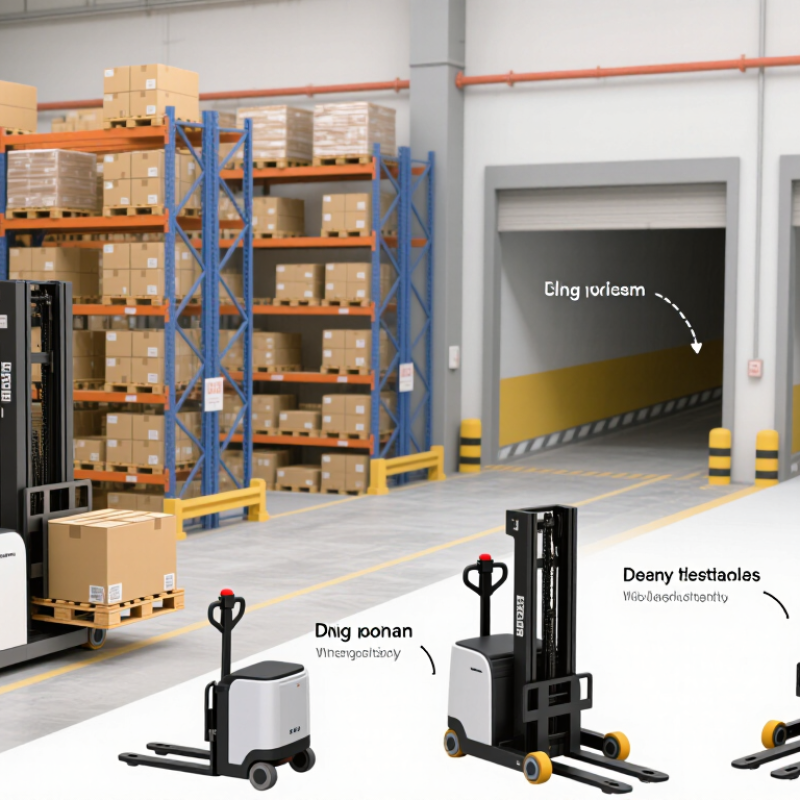
What Is the Best Automatic Stacker for 2026?

What an Automatic Stacker Is and How It Works

What Is the Best Automatic Stacker for 2026?

An automatic stacker moves and raises palletized loads with limited manual handling. Depending on its design, it may follow a programmed route or operate within a defined work zone. Sensors detect obstacles and help align the forks with a pallet. A controller then coordinates travel, lifting, and lowering. Operators set load limits, travel paths, and stacking height before work begins. Exact functions vary; “automatic stacker” is not one standard machine type.

The International Federation of Robotics’ World Robotics 2024 report recorded 541,302 industrial robots installed worldwide in 2023, bringing the global operating stock to about 4.28 million. These figures cover industrial robots broadly, not stackers specifically, but they show the scale of industrial automation.

For buyers, the practical test is simpler: can the stacker handle your pallet size, floor conditions, aisle width, and shift pattern? A neat demo is useful. Real performance on a busy, uneven floor matters more. I’d still want a site trial.

Tips: Measure your narrowest aisle and heaviest routine load. Check stopping distance, battery runtime, and manual recovery steps. Ask who maintains the sensors, and test with your actual pallets before choosing a system.

Main Types of Automatic Stackers Available in 2026

Automatic stackers in 2026 range from powered pallet stackers to integrated systems that build full pallet loads. Walk-behind and ride-on models lift individual pallets, making them useful in narrow aisles, staging areas, and smaller warehouses. Operators should check lift height, rated load, turning space, and how often the equipment runs. A compact frame helps, but only if it can handle the heaviest routine load. That detail matters.

Layer stackers arrange cartons or products into complete layers before transferring them onto a pallet. They suit steady production lines with consistent package sizes. Conveyor-integrated stackers combine feeding, alignment, and pallet building, reducing manual handling between stations. Robotic palletizing cells offer more flexibility when products vary in shape or stacking patterns, though they need suitable guarding, programming, and floor space. A tidy specification sheet can still mislead: actual carton friction and uneven packaging may affect stack quality.

The best type depends on throughput, product mix, pallet dimensions, and available space. For example, a line handling one carton size at a fixed rate may benefit from a dedicated layer system. A warehouse with varied loads may need a more adaptable cell or simpler powered stacker. Check recovery procedures, maintenance access, and operator training alongside speed. These practical details are easy to overlook, and sometimes they change the choice.

What Is the Best Automatic Stacker for 2026? Main Types Available

Lift height is one practical way to compare electric stacker types. These indicative ranges reflect commonly available configurations; actual specifications vary by model and manufacturer. Choose a stacker based on required lift height, load, aisle space, and operating conditions—not lift height alone.

Key Factors for Evaluating Automatic Stacker Performance

What Is the Best Automatic Stacker for 2026?
Key Factors for Evaluating Automatic Stacker Performance

A useful evaluation starts with the actual load, not the machine’s headline capacity. Record pallet dimensions, typical weight, and the highest rack position. Then check whether the stacker can handle that load at full lift height. Capacity can change with lift height, so confirm the rating in the equipment specifications.

Travel speed matters, but so does control in tight spaces. Observe how smoothly the stacker turns near rack legs and stops at a marked drop point. Small details count. Measure aisle width and check the floor for joints, slopes, or rough patches. These conditions can affect stability, maneuverability, and operator confidence. A short on-site trial may reveal more than a speed figure.

Also compare battery runtime with the length and intensity of a typical shift. Look at charging time, access to routine service points, and how clearly the controls show faults. Safety features should suit the site’s traffic and visibility, rather than simply look impressive on a checklist. I would not trust a brochure number alone. It is easy to overlook how often loads vary or how much time workers spend repositioning pallets. That uncertainty deserves a real-world test.

What Is the Best Automatic Stacker for 2026? — Key Factors for Evaluating Automatic Stacker Performance
Stacker Type Typical Rated Capacity Typical Lift Height Travel and Handling Aisle and Floor Needs Automation Potential Best-Fit Applications Key Checks Before Selection
Pedestrian electric stacker About 1,000–2,000 kg, depending on load center and lift height Commonly about 1.6–5.5 m Operator walks behind or beside the machine; suitable for short-to-medium travel distances and moderate task frequency. Needs a clear pedestrian route and a floor suitable for the loaded machine; turning space varies with chassis and mast design. Usually low without added navigation and controls; some models can be integrated into a guided material-flow system. Small warehouses, stockrooms, loading areas, and occasional pallet stacking. Confirm residual capacity at the required lift height, mast clearance, pallet dimensions, gradient limits, and battery runtime.
Platform or ride-on electric stacker Often about 1,200–2,000 kg Commonly about 1.6–5.5 m Operator rides on a platform or stands on a platform, reducing walking during longer horizontal moves. Requires adequate aisle width, turning clearance, and floor condition for the chosen travel speed and load. Can support repeatable workflows, but autonomous operation requires compatible navigation, safety systems, and facility integration. Higher-throughput pallet movement over longer distances than typical walk-behind use. Compare travel distance per shift, braking performance, visibility, operator protection, charging needs, and turning radius.
Straddle stacker Often about 1,000–1,500 kg Commonly about 1.6–5.5 m Straddle legs support the load, allowing handling of pallet types that may not suit a standard support-leg layout. Check whether straddle legs can pass around the pallet and whether the pallet, floor, and aisle layout provide sufficient clearance. Typically operator-controlled; repeatability can be improved through standardized routes and process controls. Facilities handling open-bottom pallets or loads that need the added stability of straddle legs. Verify pallet entry dimensions, leg spacing, load stability, turning space, and capacity at the intended lift height.
Counterbalanced electric stacker Often about 1,000–2,000 kg Commonly about 1.6–5.5 m Counterweight design avoids front support legs, which can help when approaching closed-bottom pallets or certain loads. May need more turning room than a comparable support-leg design; confirm floor capacity and route clearance. Generally manual or operator-controlled; automation depends on the specific vehicle architecture and site system. Handling varied pallet designs, including loads that cannot accommodate support legs. Check stability, load center, turning radius, overhead clearance, and rated capacity at the required elevation.
Automated stacker crane for an AS/RS Application-specific; commonly engineered for unit loads from several hundred kilograms to around 1,500 kg System-specific; installations can reach tens of metres Travels on a dedicated aisle rail and transfers loads to storage locations or conveyor interfaces; throughput depends on layout and cycle design. Requires engineered rails, suitable floor and building structure, controlled access, and precise interface alignment. High when integrated with warehouse control or management software, conveyors, identification, and safety systems. High-density storage with frequent, repetitive pallet movements and predictable inventory flows. Model single- and dual-command cycle times, storage density, peak throughput, uptime, recovery procedures, and integration costs.
Automated guided pallet stacker Set by the base vehicle and attachment; verify the rated capacity for the complete configuration Limited by the lift mechanism, mast, and approved automated operating envelope Can perform repeatable pickup, transport, and drop-off tasks along mapped or guided routes; real output depends on traffic and charging cycles. Needs mapped routes, suitable floor conditions, defined crossing rules, and protected operating zones. High for stable, repetitive routes when fleet control, obstacle detection, and facility interfaces are properly configured. Repetitive pallet transfers between production, staging, and storage areas. Assess route variability, pedestrian interaction, payload detection, safety validation, fleet dispatch, and manual recovery options.
Selection benchmark Choose capacity above the heaviest expected load, including attachments and any offset load center. Match maximum lift height and required free lift to rack beam levels and building clearance. Measure actual moves per hour, travel distance, load presentation time, and operator or system availability. Measure the narrowest operating aisle, turning points, floor slope, surface condition, and overhead obstructions. Compare the level of automation with task repeatability, integration readiness, and required human oversight. Select for the full material-flow task rather than rated capacity alone. Request load charts, duty-cycle guidance, battery data, safety documentation, maintenance requirements, and a site-specific trial.
Figures are indicative ranges for common equipment categories, not guaranteed specifications. Actual capacity, lift height, dimensions, speed, and throughput vary by design and operating conditions. Verify the manufacturer’s load chart and conduct a site assessment before purchase.

How Leading Automatic Stacker Designs Compare

Automatic stackers differ most in how they travel, sense obstacles, and handle pallets. Fixed-route guided vehicles suit repeatable runs between staging lanes and production cells. Autonomous mobile designs can reroute around temporary obstructions, but need dependable maps and clear traffic rules. Conveyor-integrated units reduce handoffs at fixed docks, though they offer less flexibility when layouts change. Check rated capacity at the actual load center, not just the headline capacity. Also test pallet condition, floor joints, and turning clearance. Small details matter.

MHI and Deloitte’s 2024 Annual Industry Report found that 55% of surveyed organizations planned to invest in robotics and automation within five years. IFR’s World Robotics 2024 reported 541,302 industrial robots installed worldwide in 2023; that figure covers all industrial robots, not stackers alone. These reports show growing automation interest, but they do not identify a universal best design. Match the machine to peak moves per hour, aisle width, lift height, and shift pattern. Ask for a live trial with your heaviest common pallet. A clean demo aisle can hide real bottlenecks. One weakness in many comparisons: they treat software integration as an afterthought, even though failed handoffs can leave a capable stacker waiting beside a full dock.

How to Choose the Best Automatic Stacker for Your Operation

What Is the Best Automatic Stacker for 2026?

How to Choose the Best Automatic Stacker for Your Operation

The best automatic stacker is the one that fits your actual workflow, not the one with the longest feature list. Start with load weight, pallet dimensions, required lift height, and the narrowest aisle. Check turning clearance with a loaded unit; a few extra centimeters can matter near racking or dock doors. Floor joints and ramps matter, too. A stacker that performs well on smooth concrete may feel less stable across uneven surfaces. Match battery capacity to your shift pattern and charging breaks. Then compare visibility, controls, and safety features for the people who will use it daily.

Tips: Measure aisles at their tightest points. Test with your heaviest typical pallet. Ask operators to try the controls. Record how long loading and charging take during a normal shift.

Before choosing, run a practical trial in your own space. Watch for slow turns, awkward pallet pickup, and repeated repositioning. These small delays can add up, though they are easy to overlook during a short demonstration. Consider service access, spare-parts availability, and maintenance needs alongside purchase price. A lower-cost unit may be a poor fit if it cannot keep pace with peak demand. Be honest about growth, but avoid paying for capacity your operation may never use. One detail is easy to miss: operator feedback can be mixed, so check it against observed work, not just a quick preference survey.