
Automated Dispensing Robot Videos

A World of Robotic Dispensing and Assembly Solutions

China Best Solenoid Valve Manufacturers How to Choose?

Choosing among China’s best Solenoid Valve manufacturers requires more than comparing prices. A reliable decision begins with the application. Consider fluid type, operating pressure, temperature, port size, voltage, response time, and installation environment. A valve controlling clean water may need a different seal from one handling compressed air or mild chemicals. Small details matter. A 24V DC coil, brass body, and IP65 enclosure can suit one system, but fail in another.

Experienced buyers usually examine manufacturing evidence, not attractive product pages. Ask whether the supplier controls machining, coil winding, assembly, and final testing internally. Request material certificates, pressure-test records, dimensional drawings, and sample inspection reports. Confirm the stated cycle life under real operating conditions. Check how the manufacturer handles leakage, coil overheating, delayed delivery, and replacement parts. These conversations reveal practical reliability.

Factory audits can provide stronger evidence. Look for clean assembly areas, calibrated test equipment, traceable batch numbers, and trained technicians. Certifications such as ISO 9001 may support credibility, but they should not replace technical verification. A certificate alone does not prove consistent valve performance. Testing a small sample is wise. Testing only the best sample is not enough.

No manufacturer is perfect. Even a reputable supplier may misunderstand a specification or overlook a packaging detail. Clear drawings and written acceptance criteria reduce that risk. Compare communication speed, engineering support, customization ability, and after-sales response. The lowest quotation can become expensive after failures, downtime, or repeated replacements. A careful selection process connects proven quality with the actual demands of your equipment.
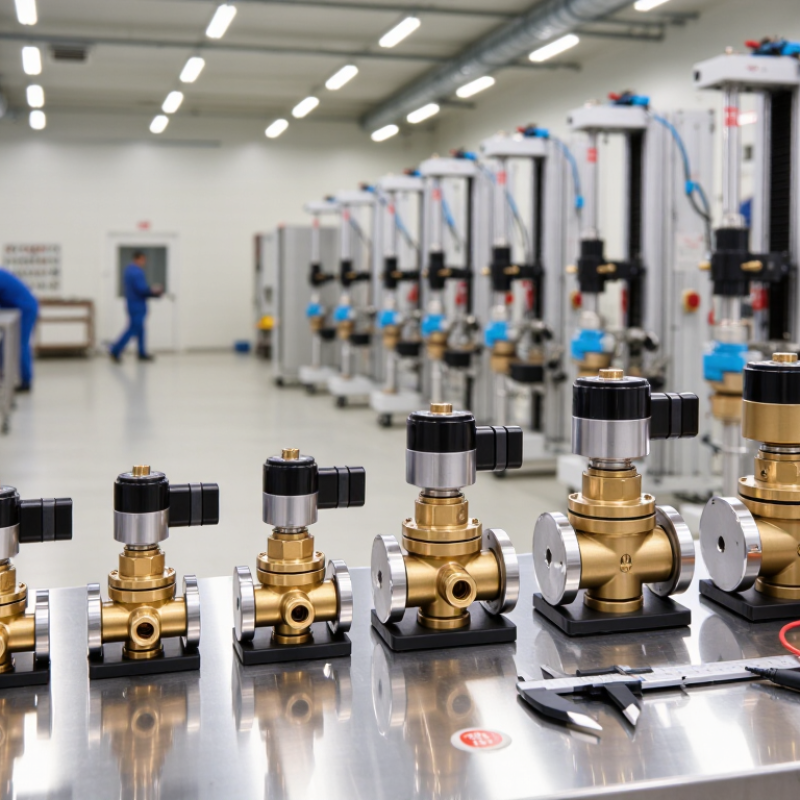
China Best Solenoid Valve Manufacturers How to Choose?

What Is a Solenoid Valve and How Does It Work?

A solenoid valve is an electrically controlled device that manages air, water, gas, or other compatible fluids. Its main parts include a coil, plunger, spring, and valve body. When voltage reaches the coil, it creates a magnetic field. The plunger then moves, opening or closing the flow path. When power stops, the spring usually returns the plunger. Simple, but not foolproof.

Valve selection begins with the medium, pressure, temperature, port size, and required flow rate. A normally closed valve remains shut without power, while a normally open valve allows flow.

Direct-acting designs handle smaller flows and can work without pressure difference. Pilot-operated designs support larger flows, but they often need minimum differential pressure.

Grand View Research valued the global solenoid valve market at about USD 4.6 billion in 2023, showing broad demand across water treatment, automation, heating, and process equipment.

For buyers comparing manufacturers in China, request material certificates, coil insulation data, IP ratings, cycle-test results, and traceable inspection records.

IEC 60529 helps verify enclosure protection, while ISO 9001 certification indicates a controlled quality system, not perfect performance.

Ask for samples under actual media and temperature conditions. A valve that works on clean water may fail with oil, particles, or aggressive chemicals.

This is where many specifications become vague.

Check response time, leakage rate, replacement parts, and after-sales testing evidence before approving a production order.

Which Solenoid Valve Types Suit Different Applications?

China Best Solenoid Valve Manufacturers: How to Choose?

Choosing a solenoid valve starts with the application, not the catalog price. A 2/2-way valve suits simple on-off control for water, air, oil, or inert gas. Normally closed models remain shut without power, improving safety during outages. Normally open models keep flow available when electricity fails. A 3/2-way valve works well with pneumatic cylinders, actuators, and small control circuits. Direct-acting valves handle low flow and respond quickly. Pilot-operated valves support larger flow rates, but they need enough pressure to function correctly.

Media temperature, pressure, viscosity, and cleanliness also affect the choice. Stainless steel bodies resist many wet or corrosive environments, while brass often fits clean water and compressed air systems. Seal material must match the medium; an unsuitable seal can swell, crack, or leak. Coil voltage must match the control panel exactly. Check connection size too. A mismatch may force adapters and create extra leakage points.

In field service, I once selected a pilot-operated valve for a low-pressure line. It opened slowly and caused unstable actuator movement. That mistake changed my inspection routine. I now verify minimum pressure, flow direction, response time, and duty cycle before approval. Dusty workshops may need protection against moisture and particles. Continuous operation also demands a properly rated coil. Test the valve under real operating conditions, because laboratory pressure rarely tells the whole story.

How to Evaluate China-Based Solenoid Valve Manufacturers

China Best Solenoid Valve Manufacturers How to Choose?

Evaluating China-based solenoid valve manufacturers requires more than comparing online prices. Check their factory address, production equipment, testing rooms, and engineering staff. A polished website proves little. Request recent product drawings, material specifications, and pressure-test records. Reliable suppliers can explain sealing materials, coil voltage, operating temperature, and response time clearly.

Ask for a sample before placing a large order. Test it with your actual fluid, pressure, tubing, and electrical conditions. Watch for leakage, delayed switching, excessive heat, or unstable performance. I once accepted a sample after a short bench test. It worked well, but its coil overheated during continuous operation. That mistake changed my inspection process.

Review quality controls at several stages, including machining, assembly, wiring, and final testing. Each valve should have traceable batch information. Verify certificates through the issuing organization when possible. Confirm whether testing follows recognized technical standards suitable for your application. Also examine production capacity, spare-part availability, packaging, and documented lead times. Ask how the manufacturer handles defective samples and design changes. Their response often reveals more than sales materials. Good communication matters. Still, do not confuse quick replies with technical competence. An independent pre-shipment inspection may add cost, but it can expose incorrect dimensions, damaged threads, or missing test records before shipment.

What Quality Standards and Certifications Should You Check?

China Best Solenoid Valve Manufacturers: How to Choose?

Quality documents should come before price comparisons. The ISO Survey 2022 recorded more than 1.2 million ISO 9001 certificates worldwide. That figure shows adoption, not automatic product quality. Ask manufacturers for a current certificate, registration scope, and audit status. The scope should cover valve design, assembly, testing, or related manufacturing activities. A generic certificate may be less useful than expected. Check whether the certificate belongs to the actual production site.

Match certifications with the valve’s working conditions. IEC 60529 defines IP protection ratings, which matter when coils face dust or water. For electrical safety, review IEC 60730 or applicable national requirements. UL 429 can be relevant for electrically operated valves in certain markets. Pneumatic applications may require testing aligned with ISO 4414. Gas service needs stricter product-specific compliance, such as EN 161 where applicable. Do not accept a logo alone. Request test reports showing pressure, leakage, insulation resistance, coil temperature, and cycle performance.

Traceability reveals more than polished brochures. Look for batch numbers, material certificates, calibration records, and final inspection results. Independent laboratory reports add confidence, especially for high-cycle equipment. A useful audit question is simple: “Can you show the failed-test record?” Honest suppliers should explain corrective actions, not hide every defect. Certification databases and issuing-body verification should also be checked. One weakness remains: certificates can be valid while production quality changes later. Schedule sample testing and periodic re-audits. That extra effort is easy to overlook.

China Best Solenoid Valve Manufacturers: Standards and Certifications to Check

Use the publication year as a document-verification reference. Confirm that the manufacturer provides valid certificates, the applicable product scope, testing records, and current editions relevant to your application.

ISO 9001:2015

Check quality-management certification, certificate scope, issuing body, and validity.

IEC 60529

Verify the claimed IP rating with enclosure test reports matching the valve and coil assembly.

IEC 60079

For hazardous areas, confirm the exact Ex marking, gas or dust group, temperature class, and certificate number.

PED 2014/68/EU

For pressure equipment supplied in the EU, check conformity assessment and pressure-category information.

Reference years shown: ISO 9001:2015, ISO 14001:2015, ISO 45001:2018, IEC 60529:1989, IEC 60079-0:2017, and PED 2014/68/EU. A publication year does not prove that a supplier certificate is current.

How to Compare Prices, Customization, and After-Sales Support?

China Best Solenoid Valve Manufacturers: How to Choose?

Price comparisons only work when the specifications match. Request quotes for the same valve size, port type, voltage, pressure range, seal material, and protection rating. A cheaper offer may exclude testing, connectors, packaging, or export documentation. Ask for a clear cost breakdown. Also check sample charges, minimum order quantity, tooling fees, and delivery terms. The lowest price is not always the lowest operating cost.

Customization should be measured in practical details. Can the manufacturer adjust coil voltage, thread standards, sealing materials, response time, or cable length? Ask for drawings, material data, and a sample approval process. Confirm whether engineering changes require new tooling. Small changes can create long delays. I would not trust vague promises. Written specifications matter more than friendly conversations.

After-sales support often separates a reliable supplier from a risky one. Confirm the warranty period, response time, replacement policy, and availability of coils, seals, and connectors. Ask how technical faults are diagnosed remotely. A useful supplier should provide test records and installation guidance. Check whether support continues after the first shipment. This point is easy to overlook. A perfect comparison is impossible because future service is hard to measure, but response evidence, references, and documented procedures can reduce uncertainty.