
Automated Dispensing Robot Videos

A World of Robotic Dispensing and Assembly Solutions

How to Choose the Best Spunlace Machine for Your Factory?

Choosing the best Spunlace Machine can shape your factory’s quality, output, and operating costs for years. It is not simply a matter of selecting the fastest line. Your decision must match fiber type, product weight, water pressure, drying capacity, floor space, and customer requirements.

Dr. Behnam Pourdeyhimi, a respected nonwovens researcher and former executive director of The Nonwovens Institute, has stated, “Performance depends on the right materials, processes, and testing.” This principle fits spunlace production closely. A machine that handles viscose well may perform differently with polyester, cotton, bamboo, or blended fibers. Small differences matter. Web uniformity, nozzle condition, filtration efficiency, and fabric moisture can affect every roll leaving the line.

Begin with the product, not the equipment brochure. A medical wipe may require controlled cleanliness and consistent basis weight. A household wipe may prioritize softness, absorbency, and lower production cost. Walk through the factory floor. Measure available space, drainage routes, compressed-air access, and power capacity. These practical details are easy to overlook.

Experience also deserves attention. Ask suppliers for running data from similar materials and production speeds. Request maintenance records, energy figures, spare-parts support, and commissioning plans. Do not accept impressive numbers without testing.

There is no perfect machine. That is worth admitting. A cheaper line may create hidden costs through downtime, water treatment, or difficult adjustments. A premium system may exceed your real needs. The right choice balances proven performance, future expansion, operator skills, and dependable technical support. This guide examines those factors clearly, so your investment reflects actual factory conditions rather than optimistic assumptions.
How to Choose the Best Spunlace Machine for Your Factory?

Factory Needs and Product Goals for a Spunlace Machine

How to Choose the Best Spunlace Machine for Your Factory?

Factory Needs and Product Goals for a Spunlace Machine

Choosing a spunlace machine should begin with your factory’s product goals, not its advertised speed. A wipes line may require fine fiber opening, stable low basis weights, and accurate lotion compatibility. Medical or filtration materials may demand tighter web uniformity and stronger entanglement. Grand View Research estimated the global spunlace nonwoven market at approximately USD 8.3 billion in 2023. Its projected growth reflects continuing demand from hygiene, healthcare, and personal-care applications. However, market growth does not guarantee a good return on every machine.

Measure the details first. Record target basis weight, working width, fiber types, daily output, water quality, and available floor space. Smithers’ The Future of Spunlace Nonwovens to 2028 identifies wipes and hygiene products as important demand areas. This supports flexible equipment, especially when customers request several grades. A high-pressure system may improve strength, but it can increase energy use, pump wear, and wastewater treatment costs. Faster is not always better.

Ask the supplier for trials using your actual fibers. Examine tensile strength, softness, absorbency, dust, edge quality, and roll hardness. Review production records from comparable factories, not only laboratory samples. The 2024 INDA Global Nonwoven Markets report shows the scale and competitiveness of nonwoven production worldwide, but each factory still faces different labor and utility costs. My practical concern is often overlooked: operators must adjust the line easily during a night shift. A technically advanced machine can still disappoint when cleaning takes too long or spare parts are difficult to source.

How to Choose the Best Spunlace Machine for Your Factory?

Typical basis-weight targets by spunlace product goal

Product requirements should guide machine selection. Lightweight wipes generally require stable web forming and precise water-jet control, while medical, hygiene, and industrial materials may require higher basis-weight capability, stronger bonding, and greater line flexibility. The ranges shown are representative planning values in grams per square meter (gsm); confirm the final specification through product trials and process validation.

Key Machine Types and Their Operating Differences

How to Choose the Best Spunlace Machine for Your Factory?

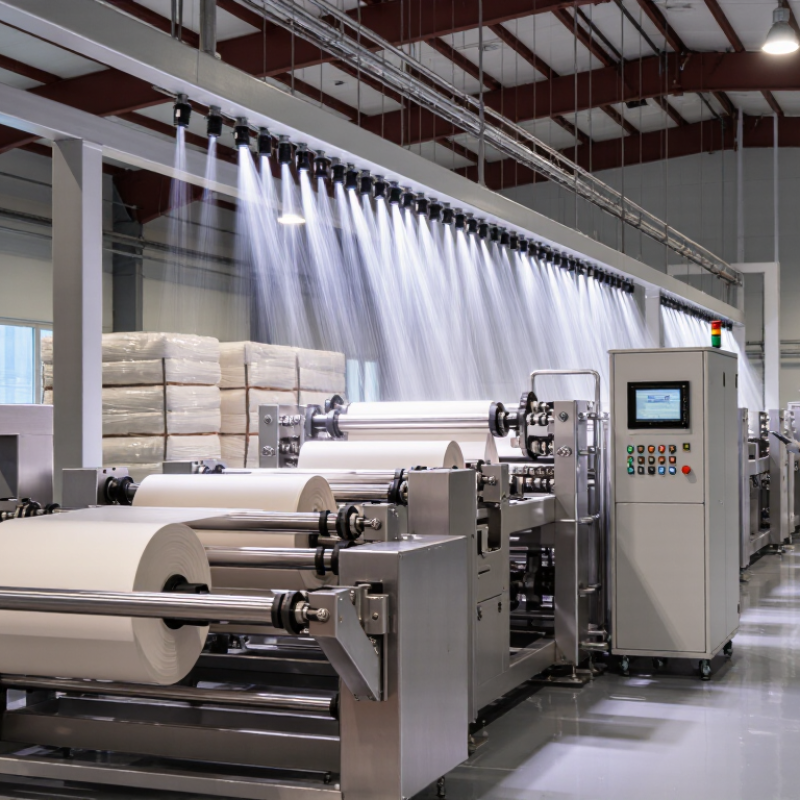
A spunlace line usually begins with web formation, followed by water entanglement, dewatering, drying, and winding. The main machine types differ in how they support and move the fiber web. Flatbed systems carry the web on a perforated belt. They offer accessible cleaning and flexible process adjustments. Drum-based systems wrap the web around a perforated cylinder. This design can improve support during high-pressure jet treatment. Hybrid lines combine both arrangements for staged processing.

Operating differences become clear during production trials. Flatbed machines often suit varied product widths and frequent material changes. Drum systems may provide more stable web control at higher speeds. Their curved surface can reduce loose edges, but cleaning access may require more planning. Multi-stage hydroentanglement machines use several jet manifolds. Operators can adjust pressure gradually instead of applying maximum force immediately. This helps protect delicate fibers and control fabric strength.

Check the fiber blend before choosing the line. Short fibers may need gentler web handling and stronger support. Recycled fibers can create more dust, demanding effective filtration and regular inspection. Watch the water system closely. Nozzle blockage, uneven pressure, and poor filtration can mark the fabric within minutes. I would not select equipment from speed figures alone. A faster line can consume more energy and produce more startup waste. In practice, a slightly slower machine may deliver steadier quality. One trial is rarely enough. Test moisture, tensile strength, basis weight, and surface appearance across several batches. Be honest about the weak point.

Material, Capacity, and Process Compatibility

How to Choose the Best Spunlace Machine for Your Factory?

Material selection should guide the machine decision. A line designed for viscose may not handle polyester blends efficiently. Check fiber length, fineness, moisture behavior, and recycled content before requesting quotations. Carding and crosslapping systems also affect web uniformity. Small differences become visible as weak edges, holes, or uneven absorbency.

Capacity is more than a nameplate number. Calculate expected output using operating hours, changeover time, maintenance, and realistic utilization. A machine rated at 8,000 kilograms daily may produce far less after cleaning and product changes. INDA’s 2024 Global Nonwoven Industry Outlook identifies hygiene, wipes, and filtration as important demand areas. These markets require stable quality, not only high speed. Measure grams per square meter, line width, and water consumption during factory trials.

Process compatibility deserves close inspection. Hydroentanglement pressure, nozzle design, dewatering, drying, and wastewater treatment must match your target products. Smithers’ recent nonwovens outlook reports continued growth in spunlace applications, especially in disposable and technical products. That growth can tempt factories to oversize equipment. It may be a costly mistake. Ask for trials using your actual fibers and target basis weights. Review strength, elongation, softness, shrinkage, and energy use. A slower line with fewer defects can outperform a faster one. The numbers are not always comfortable.

Quality Control, Automation, and Energy Efficiency

How to Choose the Best Spunlace Machine for Your Factory?

Quality control should begin before fibers enter the production line. Inspect the web-forming system, water filtration, and hydroentanglement pressure controls. Stable pressure helps create uniform strength, softness, and absorbency across the roll.

Ask for measurable data, not attractive promises. Check basis-weight variation, moisture levels, line speed, and rejection rates during a factory trial. Sensors should detect breaks, uneven webs, and blocked nozzles quickly. Automatic alarms reduce dependence on tired operators. Still, automation is not a cure-all. Poor calibration can produce confident but inaccurate readings.

Energy efficiency deserves equal attention. Compare water circulation, pump power, drying temperature, and compressed-air consumption under similar output conditions. A variable-speed pump can reduce power use during slower production. Heat recovery may also lower drying costs. Review maintenance access carefully; difficult cleaning can waste hours and water. A practical buyer should request utility records from comparable operating conditions. Numbers can be incomplete. That is a reason to verify them, not ignore them.

Operator training remains essential. Staff should understand pressure changes, filter cleaning, and emergency shutdown procedures. Choose a machine with clear displays and accessible controls. Test the interface with the people who will use it daily. Their feedback often exposes problems that technical brochures miss. The best decision balances stable quality, useful automation, and energy data that can be independently checked.

How to Choose the Best Spunlace Machine for Your Factory? - Quality Control, Automation, and Energy Efficiency
Evaluation Dimension Entry-Level Configuration Balanced Production Configuration High-Output Configuration What to Verify Before Purchase
Typical Web Width 1.6–2.4 m 3.2–5.0 m Confirm usable width, edge-trim allowance, and compatibility with the target product width.
Typical Production Speed 50–100 m/min 120–220 m/min Rated speed depends on fiber type, basis weight, web structure, hydroentanglement intensity, and drying conditions.
Common Basis-Weight Range 30–100 g/m² 40–200 g/m² Ask for trial results at the exact basis weights and fiber blends required by the factory.
Suitable Product Categories Wipes, light medical fabrics, and small-batch materials Industrial wipes, durable technical fabrics, filtration substrates, and large-volume hygiene materials Product suitability must be validated through tensile strength, absorbency, softness, and lint-performance tests.
Basis-Weight Control Manual setting with basic feedback Advanced closed-loop control with multi-zone adjustment and production data logging Check control accuracy, response time, calibration procedure, and the availability of trend reports.
Web-Defect Detection Operator inspection and sampling Integrated vision inspection with alarms, defect mapping, and automatic rejection options Request documented detection limits for holes, dark spots, web breaks, wrinkles, and density variation.
Hydroentanglement Pressure Typically up to about 120 bar Typically about 150–250 bar, depending on the design Higher pressure is not automatically better; verify fiber damage, energy demand, pump efficiency, and product strength.
Water Filtration and Recirculation Basic filtration with periodic cleaning Fine filtration, automated backwashing, water-quality sensors, and optimized recirculation Evaluate filter rating, wastewater treatment needs, water loss, maintenance access, and water-quality control.
Automation Level Manual recipe entry and operator-controlled adjustments Centralized line control, recipe management, remote diagnostics, and production-data integration Confirm sensor coverage, cybersecurity provisions, data-export formats, and manual override functions.
Changeover Management Manual adjustment; longer setup time Automated parameter loading with synchronized drives and setup verification Compare actual changeover time, cleaning requirements, recipe repeatability, and operator training needs.
Specific Energy Consumption Approximately 1.5–3.0 kWh/kg Approximately 1.0–2.2 kWh/kg when fully optimized These indicative ranges vary significantly with drying method, basis weight, moisture target, line speed, and water pressure.
Drying System Efficiency Standard through-air or hot-air drying Optimized airflow zoning, heat recovery, moisture feedback, and high-efficiency thermal equipment Review thermal efficiency, exhaust heat recovery, moisture uniformity, insulation, and fuel or electricity consumption.
Drive and Motor Efficiency Variable-frequency drives on major motors High-efficiency motors, coordinated drives, regenerative functions where appropriate, and power monitoring Request a motor schedule, installed power, average operating load, and measured consumption at planned output.
Quality Assurance Capability Laboratory sampling and manual records Online quality monitoring, statistical process control, traceability, and automated reporting Define acceptance limits for basis weight, moisture, tensile strength, absorbency, thickness, and cleanliness.
Maintenance Requirement Frequent manual inspection and cleaning Condition-based maintenance, automatic lubrication options, and predictive alarm functions Check spare-parts lead times, pump and filter service intervals, maintenance access, and technician requirements.
Recommended Factory Profile Low capital budget, limited product range, and small or flexible batches High-volume factory with strict quality targets, multiple shifts, and strong data-integration capability Choose based on total cost of ownership and verified product performance rather than rated speed alone.
Indicative engineering ranges are provided for preliminary comparison only. Final performance should be confirmed through material trials, utility-load calculations, acceptance testing, and total-cost-of-ownership analysis.

Cost, Maintenance, Safety, and Supplier Evaluation

How to Choose the Best Spunlace Machine for Your Factory?

Cost is more than the purchase price. Calculate water, electricity, labor, filters, and wastewater treatment before comparing machines. A cheaper unit may consume more energy during continuous production. Request a five-year operating estimate with realistic production hours. Check whether capacity matches your actual orders, not your most optimistic forecast. Keep spare funds for installation changes and operator training.

Maintenance details often decide long-term performance. Ask how quickly technicians can replace pumps, valves, sensors, and web-forming components. A clear maintenance schedule should include daily cleaning and monthly inspections. During commissioning, operators should learn how to identify uneven webs, pressure changes, and abnormal vibration. Safety guards, emergency stops, lockout procedures, and safe chemical handling require documented checks. Small gaps matter.

Supplier evaluation needs evidence, not polished promises. Request production references, test reports, warranty terms, and response-time commitments. Visit an operating factory if possible, and speak with maintenance staff privately. Ask whether software updates, manuals, and spare parts remain available after installation. The supplier should explain rejected-material handling and quality-control records clearly. Be cautious when performance data lacks test conditions. I have seen planning fail because water quality was ignored. That mistake can increase cleaning frequency and reduce output. A useful supplier will admit limits, record assumptions, and adjust the proposal after reviewing your factory layout.