
Automated Dispensing Robot Videos

A World of Robotic Dispensing and Assembly Solutions

2026 Best Sheet Metal Parts Suppliers for Global Buyers?

In 2026, global buyers will need more than a low quotation for dependable Sheet Metal Parts. Supplier selection now involves engineering capability, material control, production capacity, and communication discipline. A reliable partner should explain tolerances clearly, confirm surface-finish requirements, and provide realistic delivery dates. Small details matter. A burr on a mounting edge can delay an entire assembly.

Ron Covell, a respected sheet-metal educator and fabrication author, emphasizes a practical lesson: “Accurate layout is the foundation of successful sheet-metal work.” That principle also applies to supplier evaluation. Clear drawings, usable 3D files, and verified design-for-manufacturing feedback can prevent costly revisions. Buyers should review laser cutting, CNC bending, stamping, welding, and finishing capabilities before approving samples. Certifications, inspection records, traceability, and packaging standards deserve equal attention.

This guide examines the 2026 best Sheet Metal Parts suppliers for global buyers. It considers technical expertise, quality systems, pricing transparency, production flexibility, and export experience. It also looks at responsiveness, because unanswered questions often become production problems. No supplier is perfect. Even experienced factories may miss a detail, especially when drawings lack revision control. That is why sample approval and measurable acceptance criteria remain essential. A polished website proves little. Consistent parts, documented processes, and honest communication prove much more.
2026 Best Sheet Metal Parts Suppliers for Global Buyers?

What Sheet Metal Parts Suppliers Provide in 2026

In 2026, sheet metal parts suppliers provide more than cutting and bending. They support global buyers from early design review to final shipment.

Experienced suppliers inspect CAD files for sharp corners, thin walls, and difficult bends. Their engineers suggest practical changes before production begins. This can reduce scrap, delays, and unexpected tooling costs.

Typical services include laser cutting, punching, CNC forming, welding, riveting, and surface finishing. Suppliers may work with stainless steel, aluminum, galvanized steel, and other approved materials. Reliable providers issue material certificates and inspection reports.

They also measure hole positions, bend angles, flatness, and coating thickness.

Small details matter here. A two-millimeter error can affect assembly.

Many suppliers now offer prototypes and small production runs before larger orders. This gives buyers a physical part for testing, although prototypes may not perfectly represent mass production. That limitation deserves attention.

Clear drawings, revision control, and agreed tolerances help prevent disputes across time zones. Secure packaging also protects corners and finished surfaces during international transport.

The strongest supplier relationships include realistic lead times, responsive technical communication, and traceable quality records.

Buyers should ask how nonconforming parts are handled. They should also confirm packaging standards, sampling methods, and change approval procedures.

Some suppliers promise very tight tolerances without checking the material or process.

That is a warning sign. Experienced sourcing teams compare evidence, not impressive claims.

Key Criteria for Evaluating Global Sheet Metal Manufacturers

2026 Best Sheet Metal Parts Suppliers for Global Buyers?

Global buyers should evaluate sheet metal manufacturers beyond low quotations. The World Bank’s 2023 Logistics Performance Index covered 139 economies. It measures customs, infrastructure, tracking, and delivery timeliness. These indicators reveal whether a supplier can support stable international shipments.

Ask for export records, packaging specifications, Incoterms, and disruption plans. Request evidence from similar projects. A factory that cannot explain a delayed container may also have weak production control. Experience matters here, but experience can still be incomplete.

Quality evidence should be process-based. The ISO Survey reports more than one million ISO 9001 certificates worldwide. A certificate alone proves little. Check its scope, validity, audit body, and covered facility. Review material certificates, first-article inspection reports, bend-angle results, burr limits, and coating thickness. Require traceability from the material heat or lot to the finished part. Claims about process capability need raw data, not polished slides. I have seen supplier scorecards miss packaging damage and revision errors. That gap deserves reflection.

Tips: Compare landed cost, not unit price. Request three to five samples from the latest drawing revision. Measure critical dimensions independently. Ask for corrective-action records from the previous twelve months. No scorecard is perfect. Use a weighted review covering quality, capacity, communication, logistics, and commercial risk.

Leading Supplier Categories and Regional Capabilities

2026 Best Sheet Metal Parts Suppliers for Global Buyers?

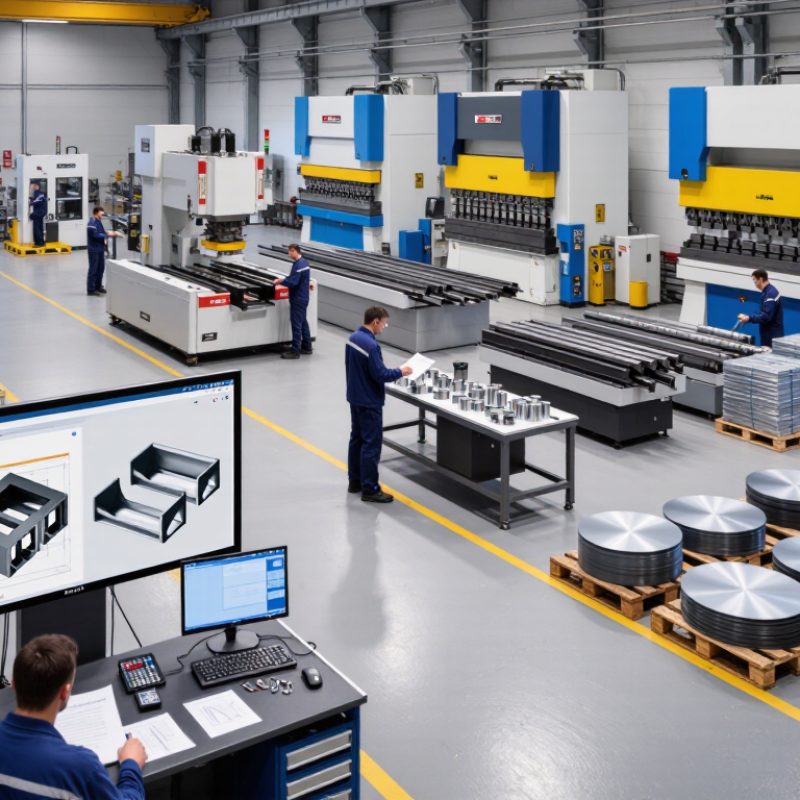
Sheet metal suppliers usually fall into three categories: prototype shops, production fabricators, and integrated contract manufacturers. Prototype shops suit low-volume trials and frequent design changes. Production fabricators offer stable processes for repeated orders. Integrated suppliers may add laser cutting, bending, welding, finishing, and assembly under one roof.

Regional capability matters as much as equipment. East Asian manufacturing hubs often provide broad capacity and competitive production costs. European suppliers may offer strong process documentation, engineering support, and short regional delivery routes. North American facilities can support rapid communication, local inventory, and complex program management. These patterns are useful, but not universal. A smaller regional shop may outperform a larger supplier on urgent engineering changes.

Tips: Request sample parts before approving volume production. Inspect bend angles, hole positions, edge condition, and coating consistency. Ask for material certificates, inspection records, and realistic lead times. Confirm whether tooling, packaging, and shipping documents are included. Do not rely on a polished website alone. A factory tour, live video inspection, or independent audit can reveal workflow gaps. I have seen excellent quotations fail because packaging ignored sharp edges. Recheck the details.

How to Compare Quality, Pricing, Lead Times, and Certifications

For global buyers, selecting a sheet metal parts supplier in 2026 requires more than a low quotation. Quality begins with process evidence: material certificates, calibrated gauges, first-article inspection reports, and traceable batch records. Ask how operators control burrs, bend angles, weld distortion, and surface damage. A polished sample can mislead. Review production parts, not only showroom pieces. Experience matters when a supplier explains likely failure points before production starts.

Compare pricing line by line. Separate tooling, programming, material, finishing, packaging, freight, and inspection fees. The cheapest offer may omit deburring or protective film. Request a costed sample order using the same alloy, thickness, tolerance, and finish as your real project. Lead time should include engineering review, approval, manufacturing, inspection, and shipping. Get dates in writing. Then ask what happens when a machine fails or material arrives late. Their answer often reveals operational maturity.

Certifications should match the application, not decorate a website. Verify certificate numbers, scope, issuing body, and expiration dates. For regulated or safety-critical parts, request documented change control and nonconformance procedures. Secure data handling also deserves attention during drawing exchange. I have seen buyers compare unit prices while ignoring packaging damage and rework risk. That mistake is expensive. Still, no checklist is perfect; supplier claims need independent checks, and even a strong audit can miss a rushed production shift. Build a small pilot order, measure results, and record what changed.

Best Practices for Selecting a Reliable International Supplier

Choosing a sheet metal supplier for global production requires more than comparing prices. In my sourcing experience, reliable results begin with visible process control. Ask for material certificates, inspection records, and sample parts from the same production route. A polished sample proves little if the supplier cannot explain its measurements. Request details about cutting tolerance, forming limits, welding methods, and surface treatment. Good engineers answer clearly. Vague answers deserve a second look. Also verify capacity, lead times, packaging, and export documentation before approving a trial order. One missed detail can delay an entire shipment.

Tips: Use a staged qualification process. Start with controlled drawing revisions, then order a small batch. Check hole positions with calipers, bend angles with gauges, and coating coverage under strong light. Compare delivered parts with the approved sample, not only the drawing. Ask how nonconforming parts are isolated and corrected. Request a realistic schedule, including holidays and port delays. Keep communication in writing. It prevents memory gaps.

A dependable international supplier also shares risks honestly. They should report material shortages, machine maintenance, or quality drift before shipment. Review their response speed during technical discussions; it often predicts future support. Site audits or live video inspections can reveal weak traceability. Still, no checklist is perfect. I have seen excellent samples hide inconsistent batch control. Repeated inspections, clear acceptance criteria, and transparent corrective actions create stronger evidence than promises. Choose a partner whose process remains dependable when orders become difficult.